A Malagasy Spiritan, who trains future missionaries in Kenya, shares insights from the SCCAI Interfaith Dialogue Workshop and the honest questions he still holds.
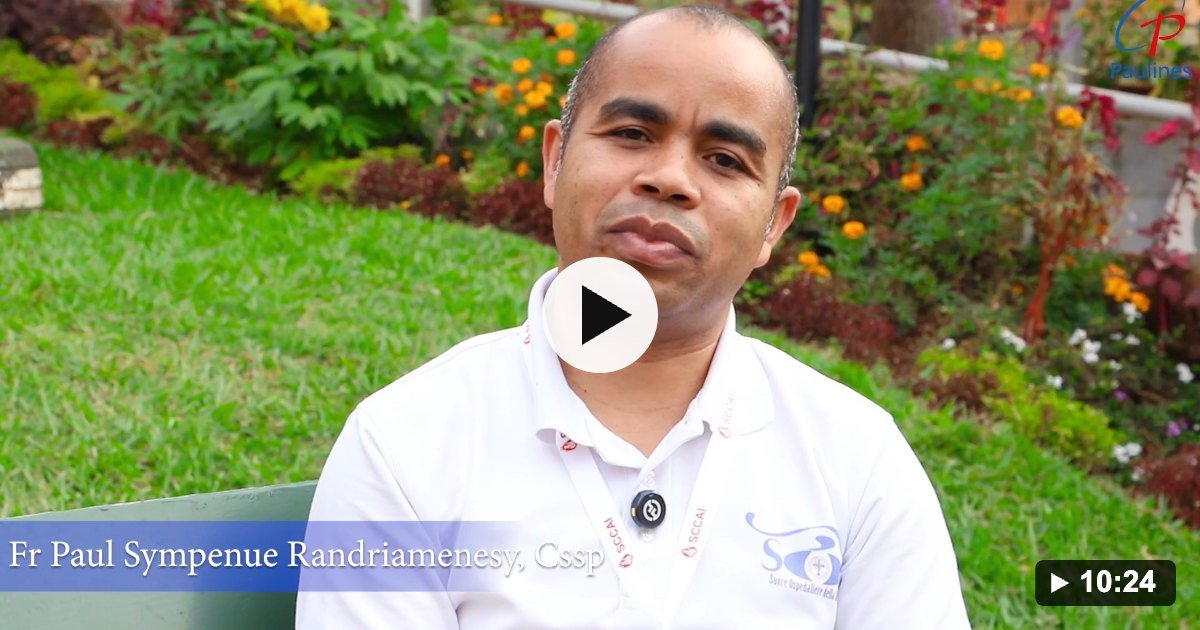
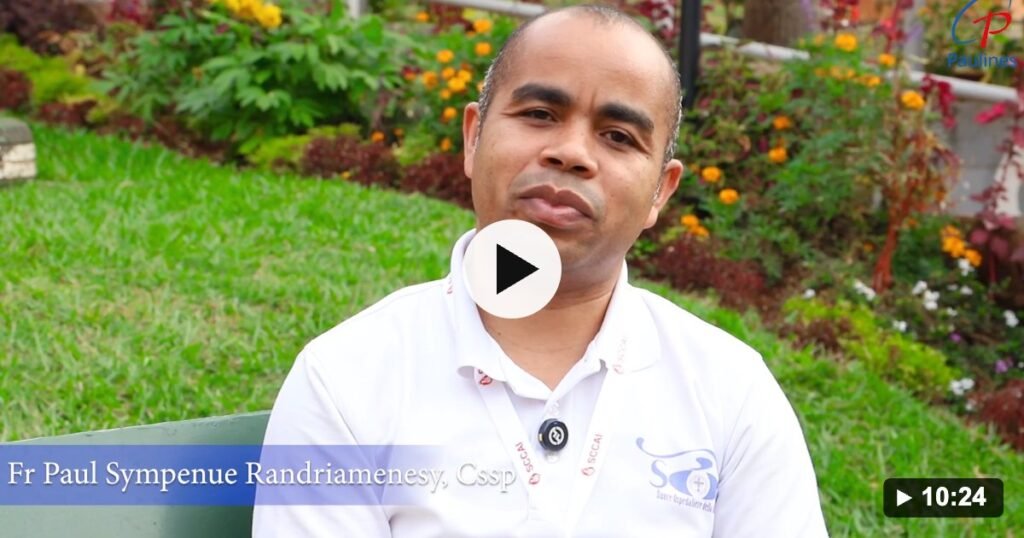
Fr Paul Randriamenesy Sympenue, C.S.Sp., from the Spiritan Province of Madagascar, serves in Kenya as Director of the Spiritan Postulancy at Kilimambogo. Having recently completed his formation as a formator, he is now fully immersed in community life, guiding young men on their path to becoming Spiritans. His objective, he states, is to instil in them the Congregation’s missionary spirit: to go forth and serve the poor, the needy, and the less privileged in society. Interreligious dialogue, he insists, is “part and parcel” of this Spiritan mission.
He shared his reflections with us at the conclusion of the SCCAI Interfaith Dialogue Workshop, held at the Rosa Mystica Spiritual Centre in Nairobi from 6 to 10 September 2026.
From a Hindu village to a lifelong calling
Fr Paul’s interest in dialogue began during his novitiate. The novitiate community resided in the heart of a Hindu village, with the novices being the sole Catholics, surrounded by Hindu neighbours and a single Muslim family. Relations were cordial. On the day of their first profession, their Hindu and Muslim neighbours prepared the food for the celebration.
“I thought that it was the same all over the world,” he recalls: Christians, Hindus, and Muslims living peacefully side by side, without questioning each other’s religious affiliations.
A different reality in Kenya
Upon arriving in Kenya, he encountered a more intricate situation, where Muslims can at times be viewed with suspicion. In 2014, just as he was beginning a deeper study of Islam, he was himself arrested after being mistaken for a Muslim. This experience profoundly shook him. For a time, he set aside his study of Islam and instead focused on African Traditional Religion, on which he subsequently wrote a paper.
Yet, dialogue continued to find him. “The more I run away from interreligious dialogue,” he says, “the more I find myself pulled back to it.” Today, one of the candidates in his formation house comes from a Muslim background, which Fr Paul views as a privilege and a fresh opportunity to learn about Islam and its perspectives on other religions.
He also observes a newer pastoral reality: some young Catholics are now converting to Islam, and some families he has met are concerned and unsure how to respond to their children’s choices.
What the workshop taught him
Although the workshop was brief for such a comprehensive programme, Fr Paul states that he learned a great deal, especially about the importance of dialogue. Every religion possesses its own values, and these values represent common ground. “To embrace each other, that is the most important thing,” he says.
He does not, however, conceal his questions. Dialogue can become one-sided if only one partner is willing to open up. It also requires resources: genuine dialogue must reach the grassroots, including children and young people, and this necessitates funding. He observes that Muslim communities are often more rigorous in educating their young than Catholics are in catechesis, where a certain “laissez-faire” attitude can prevail.
Then there is the deeper question of purpose. “What is behind all of this? Is it to convert, or is it just a dialogue, and then we eat together? What is next?”
Forming missionaries for dialogue
As a formator, Fr Paul considers it his duty to help candidates embrace the full mission of the Congregation of the Holy Spirit from the very outset: interreligious dialogue, justice and peace, and first evangelisation. His goal is that no one should embark on a mission one day and say, “We were never told.” He plans to invite external speakers so that candidates acquire the necessary skills for their future ministry.
The journey continues later in formation. In theology, Spiritan students study interreligious dialogue as part of the curriculum, and African Traditional Religion is a core course in both philosophy and theology.
Rooted in one’s own faith
For Fr Paul, openness and fidelity are intertwined. “You can embrace the dignity of the human person without losing or compromising your own faith,” he states. The temptation, he warns, is to feel overwhelmed by the ideas one encounters until one abandons everything one believes.
Hence his firm conviction: “Interreligious dialogue cannot be undertaken unless you are familiar with the doctrine of your own religion. If not, it is just a matter of befriending somebody, and you lose yourself.”
Watch the full 10-minute-24-second video and read the original article on Substack.
Leave a comment