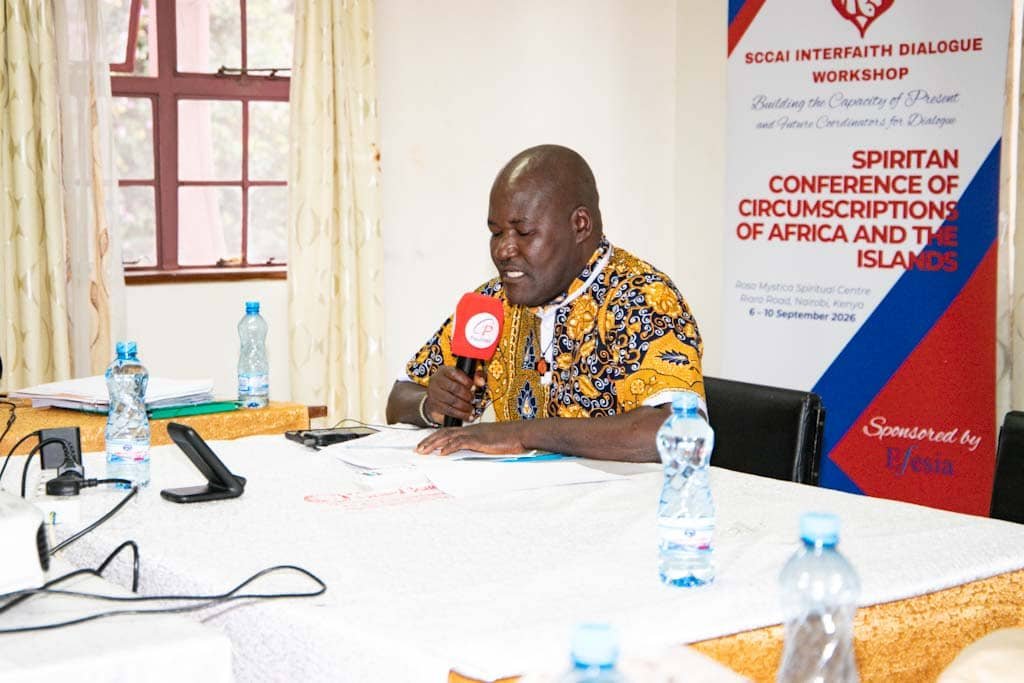
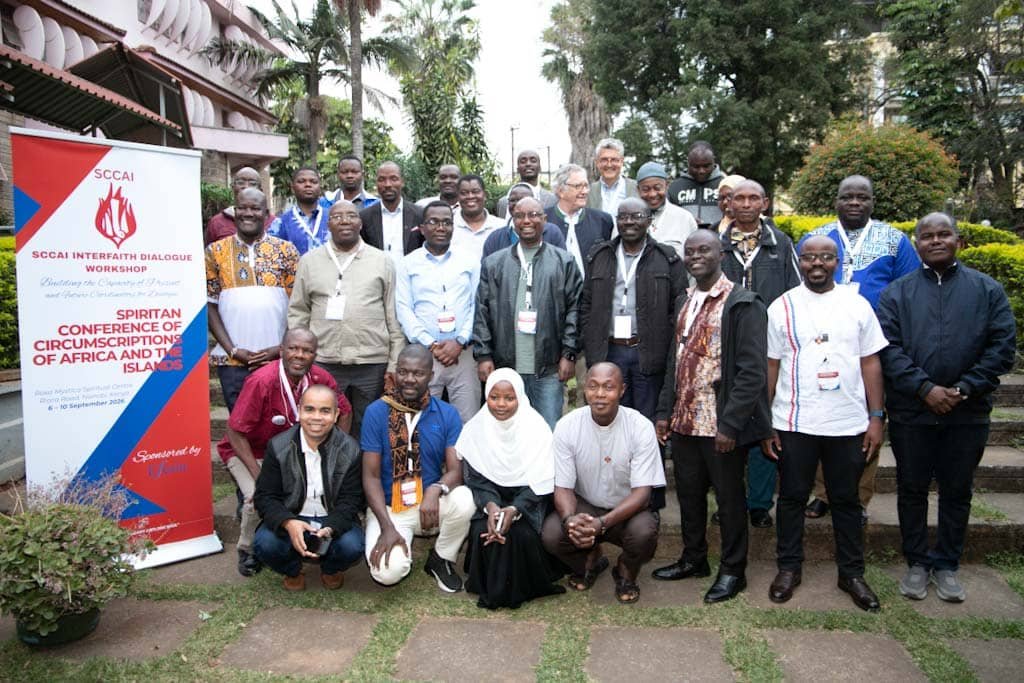
Closing remarks delivered by Fr. Fredrick Elima Wafula, C.S.Sp., Provincial Superior of Kenya and South Sudan, at the close of the SCCAI Interfaith Dialogue Workshop, Rosa Mystica Spiritual Centre, Nairobi · 9 September 2026
SCCAI Annual Training Session for Dialogue Coordinators
“Dialogue in Truth and Charity”
Nairobi – 9 September 2026
Dear confrères and Dialogue Coordinators,
Our distinguished guests and partners,
Dear friends,
Three days ago, we gathered here with a question: How can we strengthen the Spiritan mission of interreligious dialogue in Africa and the Islands? Today, we leave with something more than answers. Having listened to one another, shared our experiences, and discussed Islam, African Traditional Religions, New Religious Movements, religious freedom, and the realities of our circumscriptions, and having reflected on our manual and the future of our ministry, we now leave with the responsibility that comes with the most important question:
What will happen when we leave this room? Because dialogue does not end in Nairobi.
Dialogue begins when we return home, as Sylvester alluded to in his presentation. It begins when a Christian and a Muslim discover they can work together for the poor. It begins when a young person learns that religious difference does not have to become a reason for hatred. It begins when we have the courage to enter conversations where others have built walls. And it begins when we recognise that the person before us—whatever their religion—is first and foremost a person created in the image and likeness of God.
Dear confrères, the time for action is now. The manual we have worked on must not remain on a shelf. It must enter our parishes. It must enter our formation programmes. It must reach our lay faithful. It must speak to our young people. It must help our communities understand our Muslim neighbours, our brothers and sisters who follow African Traditional Religions, and those belonging to New Religious Movements. And it must help us become better missionaries—missionaries who know how to proclaim, but also how to listen; missionaries who know how to speak, but also how to accompany.
When we return to our Circumscriptions, I invite each of us to ask one simple question:
“What is the one concrete thing I will do differently because of these three days?” Not ten things. One thing. One parish committee strengthened. One interreligious relationship initiated. One youth programme created. One conversation begun. One prejudice challenged. One bridge built. Because sometimes the Kingdom of God advances through something very small: one conversation, one friendship, one act of courage.
Dear friends, Africa needs this witness. At a time when religion can be manipulated to divide, we must show that religion can also unite. At a time when differences can create suspicion, we must show that difference can become an opportunity for encounter.
At a time when fear of the other is growing, we must have the courage to say: “Let us meet. Let us listen. Let us understand one another.” This is not weakness. This is missionary courage. And so, as host of this gathering, I do not want to send you home merely with a revised manual. I want to send you home with a mission. Go back to your Circumscriptions and become builders of bridges. Go back and create spaces where people can meet. Go back and teach our communities that dialogue does not mean abandoning our faith. Go back and show, through your lives, that it is possible to be deeply Christian and genuinely open to others.
And when work becomes difficult—and it will—remember the four words from Zanzibar: Dignity. Spirituality. Service. Courage. Above all, remember that we do not do this work alone. The Spirit who sent us is the same Spirit who can open hearts, heal memories, overcome fear and create communion where we see only difference.
Dear brothers, We came to Nairobi to talk about dialogue. Let us leave Nairobi determined to live it. We came as participants. Let us leave as missionaries of dialogue. We came from different Circumscriptions. Let us leave as one Spiritan family, committed to one mission. And may it be said of us one day—not that we simply spoke about dialogue, but that we helped our people discover one another again as brothers and sisters. That will be our real success. That will be our real manual. That will be our real legacy.
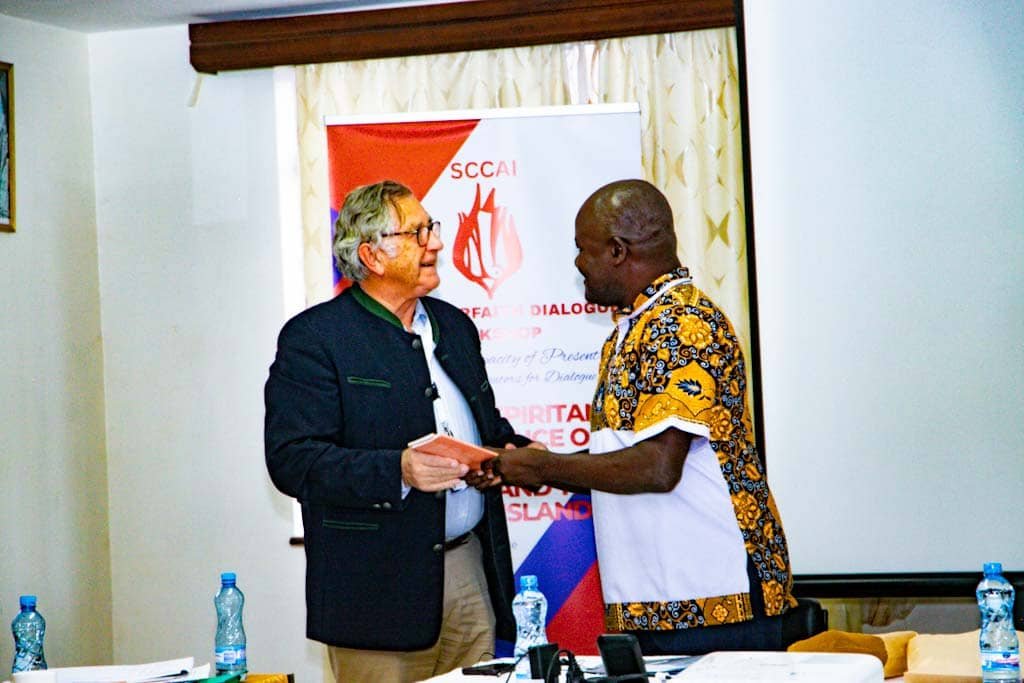
On behalf of the Spiritan Province of Kenya and South Sudan, I express my profound gratitude to all of you, to the SCCAI leadership, to our moderators, to EFESIA-Belgium and to all our guests and partners who have enriched these days. Thank you for your presence, your openness, your fraternity and your courage. As you return to your different countries and Circumscriptions, may you carry with you not only what you have learned here, but also the spirit of truth, charity and courage that has brought us together.
May Mary, Mother of the Church, accompany us.
May our Founder, Claude Poullart des Places, and Francis Libermann inspire us to remain faithful to our missionary vocation. And may the Holy Spirit continue to lead us where the Church and the world need us most.
We came to Nairobi to learn about dialogue. We leave Nairobi to become dialogue. Thank you. God bless you all.
Veni Sancte Spiritus!
I hereby declare this Annual Training Session officially closed.
Prepared and presented by:
Fr. Fredrick Elima Wafula, C.S.Sp.
Provincial Superior, Kenya and South Sudan
Leave a comment