

Sylvia Chidalu Muoka
200 Level, Faculty of Law, Spiritan University Nneochi, Abia State, Nigeria
Introduction
Let us begin by setting out the context of this reflection by referring to an interesting article written by Chinedu Nwadike and Rita Oluebube Agu on Gen Zs in relation to the use of artificial intelligence and the crisis of human intelligence. This piece, which was published by VoiceAfrique on December 2, 2025, says that Gen Z (Generation Zoomer), “a term borrowed from the practice of using zoom, refers to people born between 1997 and 2012. This generation saw the massive expansion of the Internet, a gigantic information warehouse, and the dizzying rise and global spread of different social media platforms…. Popular opinion about Gen Zs is that they are more inclined to thinking very highly of themselves, more rebellious to traditional norms, more prone to peer pressure and herd mentality, and more at risk of mental health issues arising from social media use.” Each of these points might be contested but reality speaks for itself.
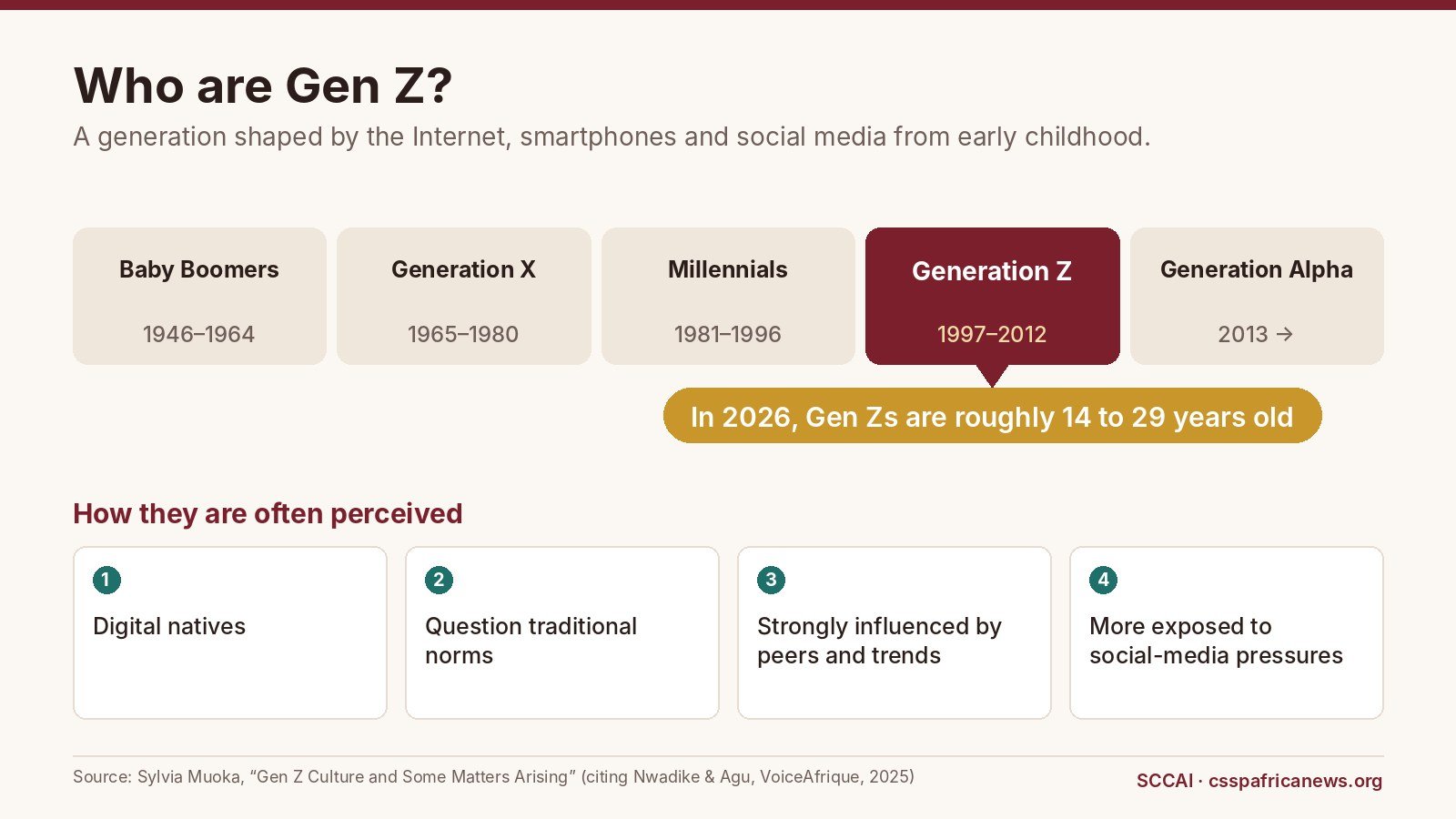
Gen Z culture refers to the way young people in the Gen Z age-bracket think, speak, dress, communicate, behave, and relate with other people. Their culture is influenced by diverse technologies, social media, education, fashion trends, popular music, and different shades of modern ideas about society and life. Although Gen Zs have brought many positive changes to society, some aspects of their behaviours have raised concerns among older generations and these are the matters arising.
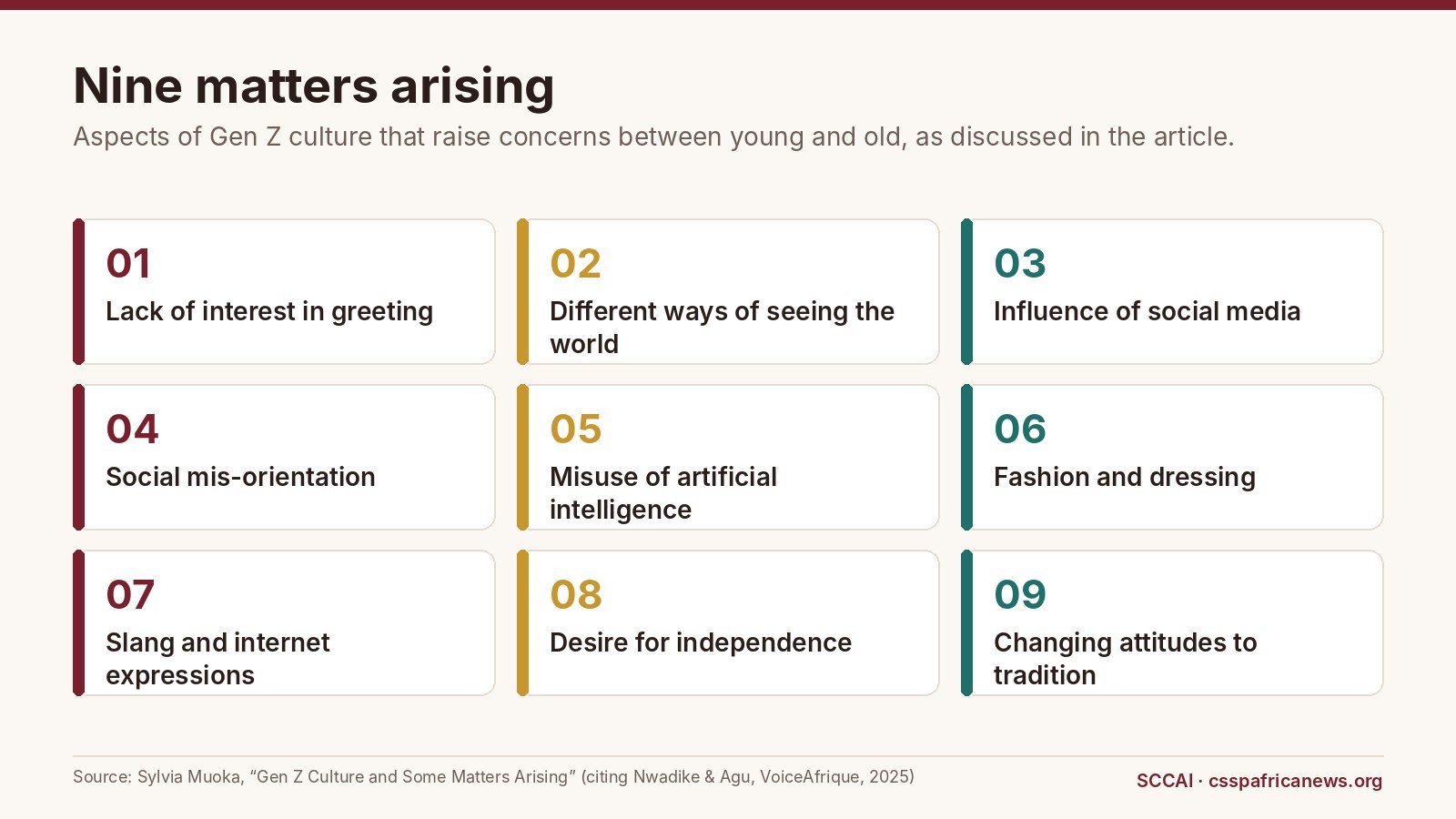
1. Lack of Interest in Greeting
One noticeable concern about some young people today is that they no longer consider greeting a necessary part of everyday life. Some may walk past their elders, teachers, neighbours, or other people without greeting them. Some others greet but when it is afternoon, they are greeting you “Good morning” or “Good evening” because their minds were not even in the greeting to be conscious of the time of the day. Some can become so engrossed with their phones that they become unaware of the world moving past them.
In Nigerian culture, greeting is an important sign of respect, good upbringing, and politeness. Older people often expect younger people to greet them when they meet the first time for the day such as in the morning or in a location. Greeting builds and strengthens bonding between the young and the old. Treating it with levity can only be dysfunctional.
On the contrary, some Gen Zs believe that greeting should be a personal choice rather than a socio-cultural obligation. They do not understand the importance older people attach to greeting. This difference in mindset and attitude sometimes creates misunderstandings between the young and the old. While it is not all young people that behave this way, the declining importance of greeting among Gen Zs raises concerns about the preservation of traditional values.
2. Different Ways of Seeing the World
Older people were raised in a society where traditions, respect for authority, and community values were strongly emphasised. Many were taught to obey elders without questioning them. Young people today, on the other hand, are more exposed to different ideas and values due to the early and broader exposure provided by the internet, social media, and interaction with people from other parts of the world. As a result, many are more willing to question traditional beliefs and to express their opinions. For example, a Gen Z would be inclined to expect an explanation before he or she can accept or implement the instructions of an elder. Of course, this does generate tension and conflict sometimes.
Gen Zs see the world differently from older generations because they were brought up and live in a world that is different. This difference does not necessarily mean that one generation is better or worse than the other. It only shows that people develop different values and attitudes based on their circumstances and experiences and different generations can learn from each other and relate in constructive ways.
3. Influence of Social Media
Social media plays a major role in Gen Z culture. Platforms such as TikTok, Instagram, Facebook, and Snapchat influence how young people communicate, dress, learn, and entertain themselves. Social media helps them connect with friends, share ideas, discover opportunities, and learn about events around the world.
However, excessive use of social media can also lead to distraction, unhealthy comparisons, and the spread of misleading information. Some Gen Zs take to social media to upload meaningless videos of activities that do not really add any value to anyone’s life but they still do it because “others are doing it.” There is also what Chinedu Nwadike, in a piece published by CSSp Africa News on October 12, 2026, calls the Social Media Bug (SM bug), which refers to a state of decline in the human cognitive powers as a result of undue attachment to social media and digital devices used for social media, and dependence on related artificial intelligence for mental tasks the human brain is capable of doing without AI.
4. Social Mis-Orientation
It is a familiar sight to see Gen Zs who are talkative celebrity-news consumers and experts on iPhone models but who can hardly make out the full name of the vice president of their country and the location of some other countries on the map of their own continents. Political awareness and participation in constructive social actions feel like unnecessary burdens whereas these are among the very factors that determine the quality of their futures in the society. Having an average knowledge of history and how foreign powers manipulate things in his or her own country feels like a distraction from catching fun. When a country like Nigeria remains headed in the wrong direction and life increasingly becomes difficult for parents who cater for the feeding, schooling and general wellbeing of their Gen Z children, the reasons for this sad national condition include the fact that many Gen Zs are mis-oriented in their hierarchy of values.
5. Misuse of Artificial Intelligence
Gen Zs are surrounded by technology and vast amounts of information have been digitally placed at their fingertips. Technically-speaking, they should be the smartest generation or, at least, a lot more intelligent than the older generation who did their studies “manually” as with visiting libraries and reading up a good number of physical books for knowledge and research purposes. Artificial intelligence is meant to be a tool that helps people learn and acquire information faster and carry out a number of useful activities in the society but many Gen Zs have rather surrendered their thinking to AI. Some students now panic at the thought of using their brains to write classroom assignments and undergraduate projects. They would rather run to AI and do their best to hide their tracks in situations where the use of AI is penalized. It is a worrisome tradition now that many final year students pay and hire out the writing of their projects only to be seen verbally stumbling through the chapters when called up during the project defense. A work looks perfect on the surface but just one serious question and the whole thing collapses, sometimes leading to teary eyes or sunken faces. “I can’t write it; let me ask AI” and “My brain is not sharp enough” now constitute a mindset among Gen Zs. This is one of the reasons anxiety increases among young students when examinations begin to approach and some of them develop fever.
Rather than building up their human intelligence by engaging in practical cognitive and academic challenges, Gen Zs are often inclined towards becoming experts in the use of ChatGPT, Claude AI, Grok, and other AI platforms, including writing a final year research work in 10 minutes. Out there, there is a whole lot of certificates without competence!
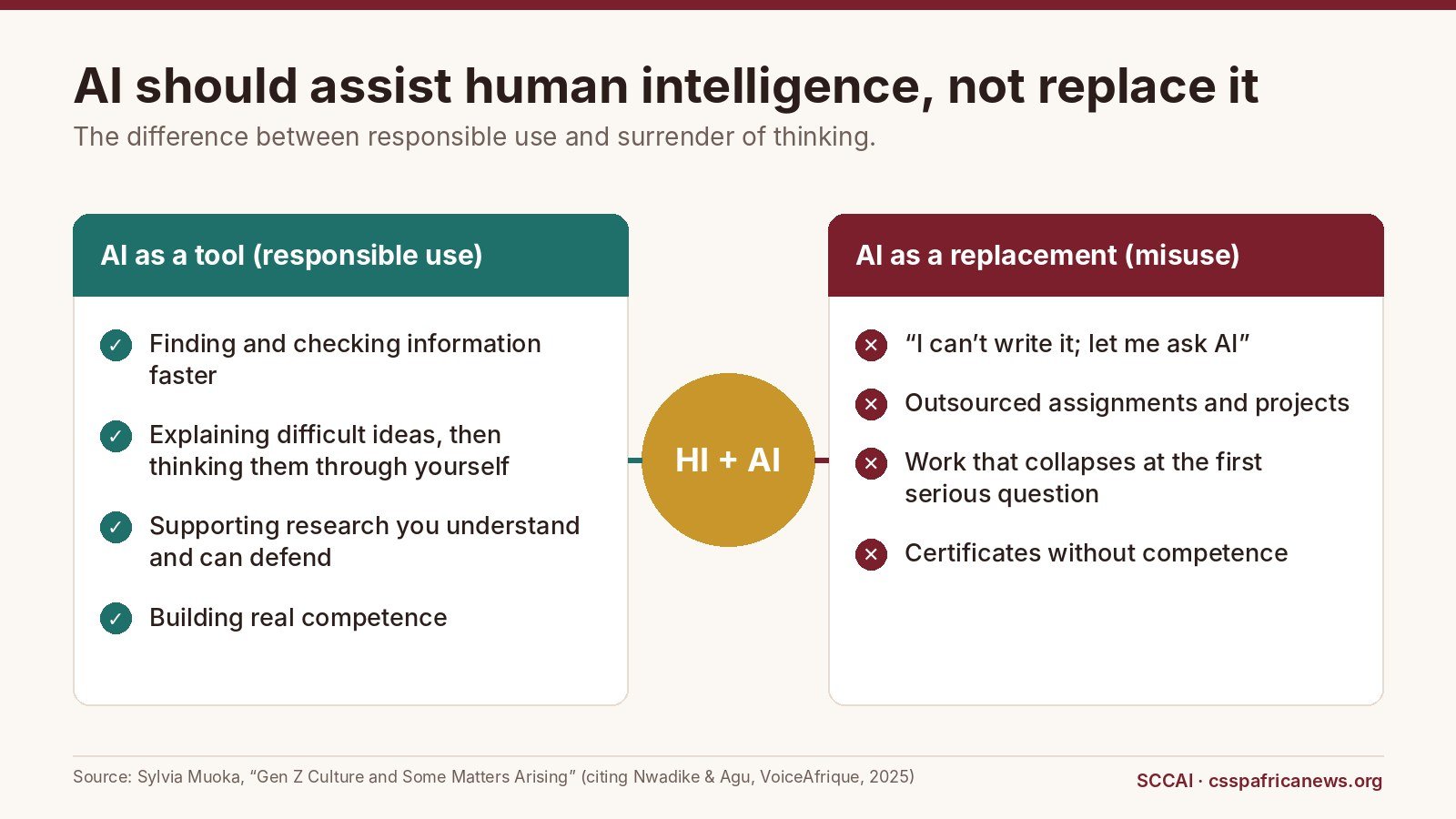
The way forward is to position artificial intelligence (AI) as a tool that assists human intelligence (HI) rather than make it a replacement for HI. Artificial intelligence has come to stay, of course, and its misuse does not imply it must be thrown away. It is rather about the responsible use of AI but, unfortunately, that is exactly where many Gen Zs fail and do not bother to rise.
6. Fashion and Dressing
Gen Zs are known for experimenting with different styles of dressing and many of them use fashion to express their personalities, creativity, and identities. While the older generation may prefer long gowns and skirts, some Gen Zs prefer putting on crop tops, baggy trousers, short skirts, joggers and other fashion styles that push modesty out of the way. They follow fashion trends, combine different styles, and sometimes adopt clothing styles from other countries seen on social media.
While fashion allows young people to express themselves, differences in dressing codes sometimes cause disagreements between Gen Zs and older people who consider modesty an important social value.
7. Use of Slangs and Social Media Features
Gen Zs often use slangs, abbreviations, emojis, and internet expressions while communicating with each other and with the older generation. Popular ones include “no cap,” “vibes,” “Omo,” “low-key,” “cruise,” “sapa,” and offensive ones like the F-word, the A-word.
These expressions make communication entertaining and help young people feel connected with their peers and up-to-date. However, excessive use of slangs can distort communication while Gen Zs are talking with the older generation. An elder may assume a wrong meaning if the person did not interrupt by asking for clarification, which can be humbling and funny.
8. Desire for Independence
Many Gen Zs want the freedom to make their own decisions about education, careers, relationships, and personal lives. They want to explore their interests and choose their own paths. In a way, they demand it from the older generation. On the contrary, the older generation often place more emphasis on following family expectations.
Although independence can encourage responsibility and personal development, it is important for young people to consider good advice from parents, teachers, and other experienced people.
9. Changing Attitudes towards Tradition
Some Gen Zs question traditional practices and beliefs that older generations consider important. They may challenge certain customs because they believe that some traditions should already change with time. Others try to combine traditional values with modern lifestyles.
These divergences sometimes create disagreements within families and communities. However, questioning a tradition does not always mean rejecting it completely. Sometimes, it is an attempt to understand its purpose and to determine whether it is still useful in the modern world or should be replaced.
Conclusion
Gen Z culture is a significant feature of modern society with respect to changes in technology, communication, fashion, beliefs, and relationships. Although young people have introduced positive ideas and new ways of doing things, some of their behaviours have raised concerns. These matters should not be glossed over but addressed in the interests of human development and social progress.
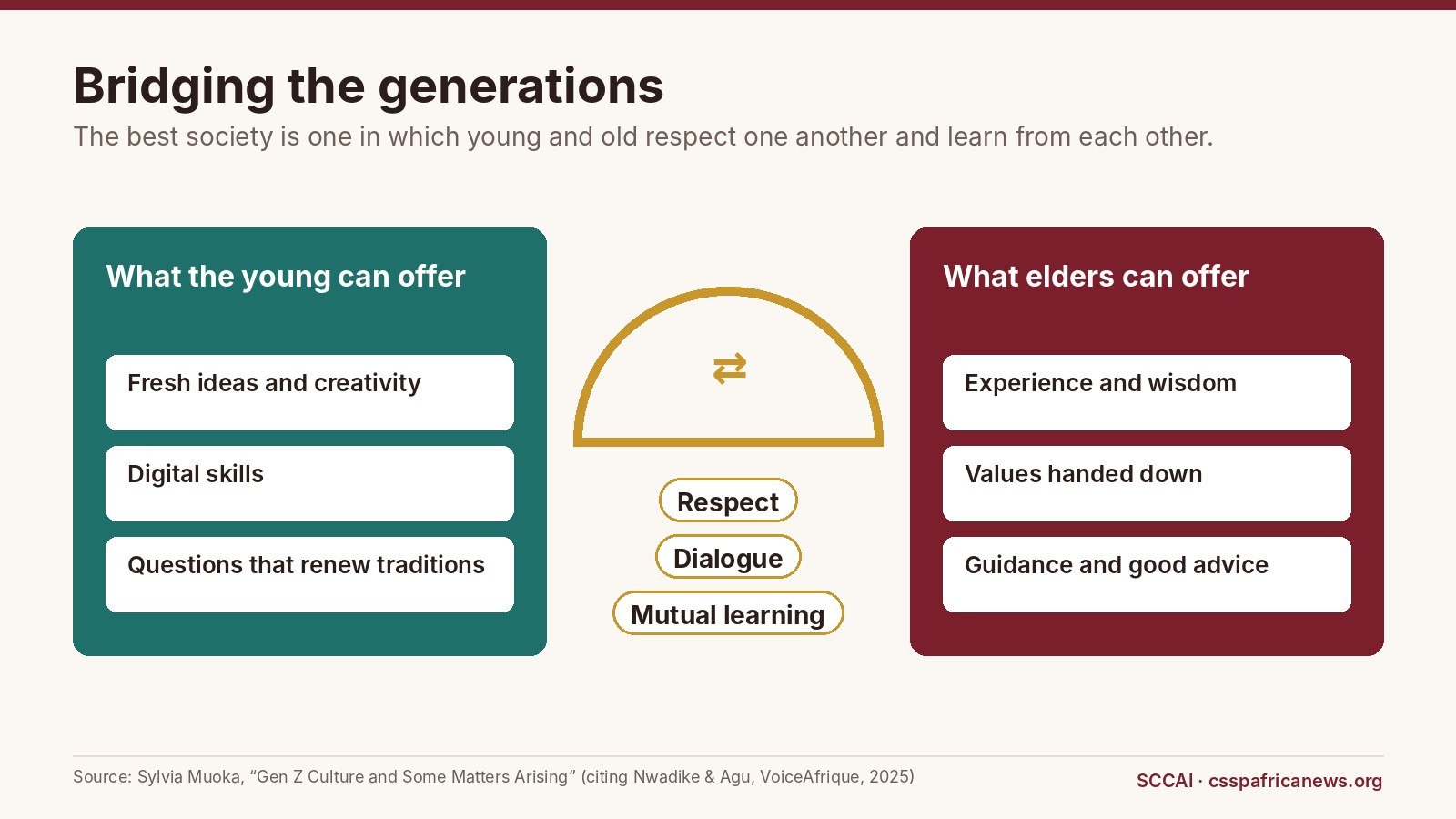
Young people should learn to balance modern ideas with the good values passed down by older generations. At the same time, older people should try to understand the peculiar challenges and experiences affecting today’s youths. The best society is one in which young and old people respect one another, learn from each other, and work together to build a better future.
Leave a comment