When Interfaith Dialogue and JPIC Embrace for Congolese and Burundian Refugees
A Tanzanian Spiritan who has served refugees in Kigoma for more than 15 years describes how religious leaders, government and humanitarian agencies worked together to end tensions between Congolese and Burundian refugees — and why no single institution can build peace alone.
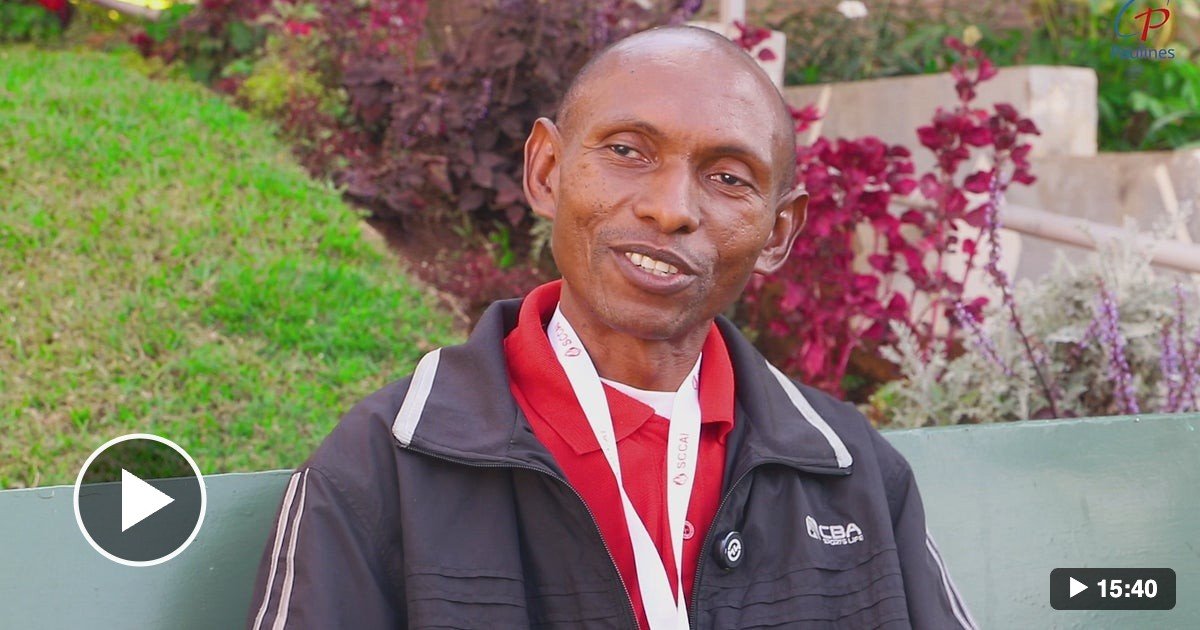
“We value humanity. That’s number one.” For Fr Deokary Joseph Massawe, C.S.Sp., this conviction is the starting point of his ministry among refugees.
Fr Deokary, of the Spiritan Province of Tanzania, has worked for more than 15 years in the Kigoma region of western Tanzania among refugees from Burundi and the Democratic Republic of the Congo. He shared his experience at the SCCAI Interfaith Dialogue Workshop, held at the Rosa Mystica Spiritual Centre in Nairobi from 6 to 10 September 2026.
Ministry in the Refugees’ Own Languages
Burundian refugees speak Kirundi, while the Congolese speak their own Swahili. The Church ministers to both communities in their own languages, respecting their cultures and traditions. Catechesis is given in Kirundi and Swahili, and pastoral practice follows the guidelines of the refugees’ home dioceses alongside those of the local Diocese of Kigoma.
The reason, Fr Deokary explains, is that a refugee camp is meant to be temporary. “We believe one day these people will either go back to their own country or go elsewhere,” he says. If they keep their language and way of life, “when they go back, they won’t be new to their own people, their own culture, their own language. It will be easier for them to continue their life.”
When Fear Divided the Camp
In the early years, Congolese and Burundians lived in the same camp and shared a single church building, and tensions ran high. Some Congolese associated Burundians with the Banyamulenge fighters they blamed for attacks during the conflict in eastern Congo. As a result, Burundians became afraid to mix with their neighbours.
The problem came to light in pastoral conversations. “When you celebrate Mass, sometimes you can’t see everything,” Fr Deokary recalls. “But in the office, people would say: I was abused by Congolese because they called me Banyamulenge, they called me a terrorist.”
The pastoral team listened to both groups to understand the roots of the hostility. Because Burundi, like Rwanda, is home to both Hutu and Tutsi communities, some Congolese refugees had extended their fear to all Burundians.
A Round Table of Faiths
The Church soon recognised that it could not resolve the conflict alone. “These people are of different faiths, different religions,” Fr Deokary says. Catholic, Muslim and other religious leaders came together around one table to share the problem and look for solutions.
Their common ground was simple: “Whether this person is a Burundian or a Congolese, all of them are human beings.” Valuing humanity as a gift from God leads to respect grounded in love. Each leader then carried this message to the grassroots. Catholics included it in catechesis for children, youth and adults, and the other communities did the same.
Government and Humanitarian Partners
The government and the United Nations agencies responsible for the camps welcomed the religious leaders’ work for building values on ethical and religious foundations. They also added practical measures. Each community received a plot for its own church: one for the Burundians, ministering in Kirundi, and one for the Congolese, ministering in Swahili.
Sports and choir competitions followed. Congolese and Burundian youth played against each other, and choirs of children, youth and adults visited each other’s churches to compete. “That is when trust started to grow among the youth,” Fr Deokary says. Friendship replaced suspicion.
Within five to seven years, life had returned to normal. People lived together and cared for one another, and Congolese and Burundians began to marry. “Now that tension has totally disappeared,” he says.
Dialogue Before Conflict
For Fr Deokary, the experience shows that interreligious dialogue is “an instrument of creating peace, collaboration, unity and peaceful coexistence,” a value to be cherished by everyone.
After studying justice and peace at the Catholic University of Eastern Africa in Nairobi, he returned to Kigoma and organised dialogue groups. Some brought together Catholics and Muslims; others, at the ecumenical level, brought together Catholics and other Christians. Again, the work began with the leaders. Each shared the core teachings of their tradition, and the others listened with respect. “We listen and ask: what can I learn from this other group?” Tolerance, he says, means listening without interfering, then looking for ways to work together.
The leaders then formed committees in their churches and mosques, reaching down to the grassroots. In the Catholic Church, these ran from families through Small Christian Communities and zones to the parish. Step by step, understanding grew and tensions eased.
For This Generation and the Next
Fr Deokary warns that prejudice in communities can be an early sign of conflict, for the present generation and for those to come. He says the workshop gave him new insights from the experiences of other participants. He plans to use them to expand the work already under way in Kigoma.
His message is clear: “One institution can’t succeed in changing the community.” Religious and civil institutions alike exist for the common good and the well-being of humanity. “If we put our hands together and collaborate, we are saving the same humanity,” he says, so that this generation and the next “will not leave anybody behind.”
Watch the full 15-minute-40-second video interview on Substack.
Leave a comment