
God’s disappointment and the call to leave behind the logic of covetousness
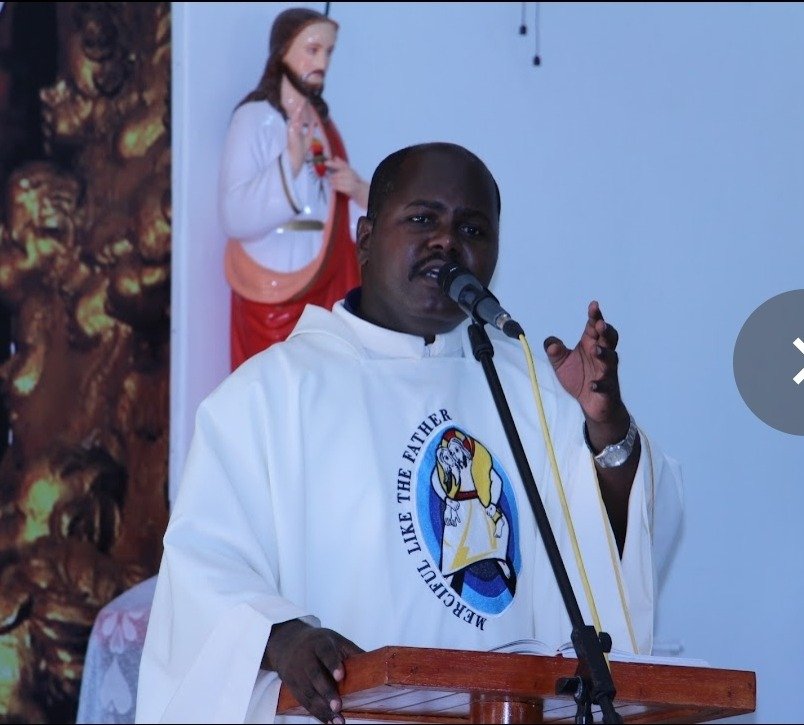
Fr Louison Emerick Bissila Mbila, C.S.Sp.
Isaiah 5:1-7; Psalm 80; Philippians 4:6-9; Matthew 21:33-43.
Dear brothers and sisters,
1. One word alone can sum up what we find in this Sunday’s texts, especially the first reading and the Gospel. That word is “disappointment”.
2. The first reading speaks of the Lord’s disappointment with his people. This disappointment is described through the metaphor of the owner and his vineyard. The owner took every care to make sure there would be a good harvest. He worked the soil well. He secured the place by building a watchtower. In the end, the produce is of poor quality. The fruits are not what he expected. He is deeply disappointed. The vineyard, says Isaiah, is the people of God. God took every possible care of Judah. But the people of Judah disappointed him. Where the Lord expected right and justice, he sees iniquity and cries of distress. The people will not be able to escape judgement, which is the logical consequence of the choice they themselves made.
3. Let us look at the situation of our families. How many parents see their efforts brought to nothing by the bad behaviour of their children? They bend over backwards, hoping their children will produce the fruits of wisdom and good morals. Unfortunately, what they see is drug abuse, alcoholism, theft, sexual licence, poor school results, and so on. So they are disappointed. Here is a vineyard, the family, that does not always produce what is expected of it. Yes, it is true that when we look at our families, there is reason to be disappointed. But the first to be disappointed is not us; it is the Lord. Despite all his love for our families, we do not always make the necessary effort to grow in justice and right.
4. In the Gospel, Jesus uses a parable about a vineyard. He uses an image familiar to his listeners, since in the Scriptures the vineyard refers to Israel. As in the text of Isaiah, the owner is also disappointed. However, in the Gospel the cause of the disappointment is not the vineyard but those to whom it was entrusted, that is, the tenants. The vineyard certainly produced good-quality grapes, but the tenants do not want to hand the produce over to the owner.
The parable Jesus uses is commonly known as “the parable of the wicked tenants” because they killed the servants and the son of the owner who were sent to them. Yet at the root there is first of all covetousness. We are dealing with tenants filled with covetousness. They want to keep for themselves what is not theirs. To do so, they are ready to use any means: beating, stoning and even killing. Saint James described the logic of covetousness in these words: “Where do the wars and where do the conflicts among you come from? Is it not from your passions that make war within your members? You covet but do not possess. So you kill. You envy but you cannot obtain; so you fight and wage war” (Jas 4:1-2). The tenants in the Gospel are filled with covetousness; they are jealous, thieves and murderers.
God’s disappointment here is due to the behaviour of the people’s leaders: the chief priests and the Pharisees. Jesus was speaking in veiled terms about what would happen to him. For he is the son of the owner of the vineyard, the Son of the Father, who will be killed outside the vineyard. He is the stone rejected by the builders, which will become the cornerstone. The chief priests and the Pharisees, as Matthew will say (21:45), had clearly understood that Jesus was speaking about them.
5. Let us return to our families. There are also situations where the good fruits are there, but it is the leaders who fail to set a good example. There may be cases where the children strive to produce the hoped-for fruits — children in whom we can find the fruit of the Holy Spirit described by Saint Paul in his letter to the Galatians, namely “love, joy, peace, patience, kindness, goodness, faithfulness, gentleness, self-control” (Gal 5:22-23) — while the parents let themselves be guided by covetousness, which leads them very far into evil.
6. Now let us ask ourselves this question: What must we do so that things go better for our families and for society? I believe the responsorial psalm and the second reading give us landmarks for moving forward on the right path.
First, the psalm, which clearly observes the pitiful state of the vineyard, shows us the way of conversion. Let us acknowledge our faults and our sins, but above all our inability to convert by ourselves. That is why the psalmist asks for God’s help: “Give us life, and we will call upon your name. Lord God of hosts, restore us; let your face shine, that we may be saved!” May we too adopt the same attitude as the psalmist for all the times we have strayed from the Lord in our witness in the family, in the Church and in society.
7. Next, let us not panic. Let us not become prophets of doom or pessimists who see evil everywhere. Saint Paul urges us to live in tranquillity and to pray. In the turmoil of this world, the Apostle’s words ring out strongly: “Have no anxiety at all, but in everything, by prayer and petition, with thanksgiving, make your requests known to God. Then the peace of God that surpasses all understanding will guard your hearts and minds in Christ Jesus.” So let us not be restless people, but let us pray with thanksgiving for all the good fruits that exist, and with supplication that we may all produce good fruits in abundance.
8. Finally, we must set to work. Saint Paul asks us to work with discernment. His advice applies particularly to the Church’s action in society: “Whatever is lovely, whatever is gracious, if there is any excellence and if there is anything worthy of praise, think about these things.” By working in this way, we will not only be able to experience deep peace within ourselves, but the Lord will never be disappointed in us. May the Holy Spirit guide us in this task, so that we may bear ever more fruit for the greater glory of God. Amen.