
SCCAI News · 22 September 2026
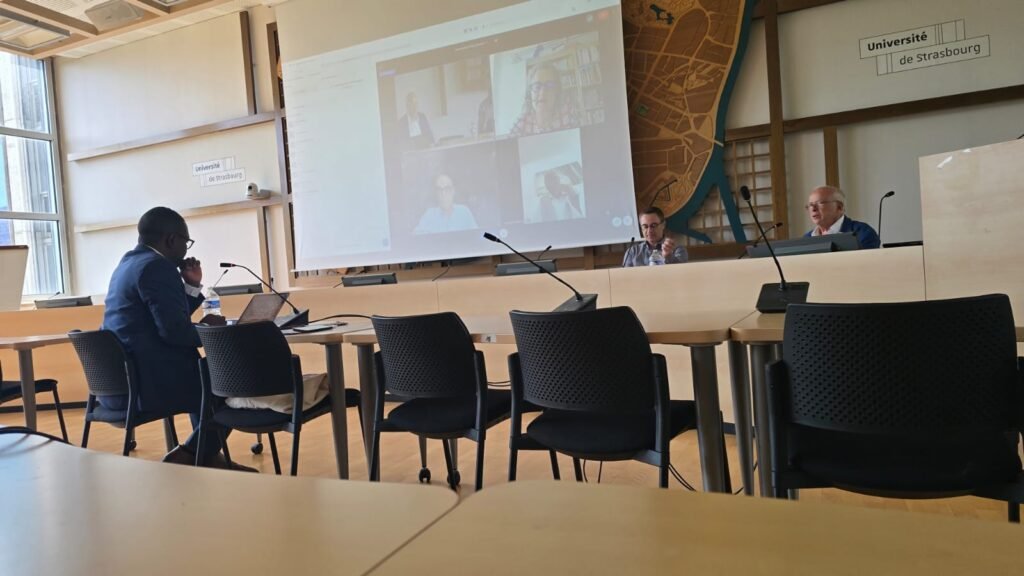
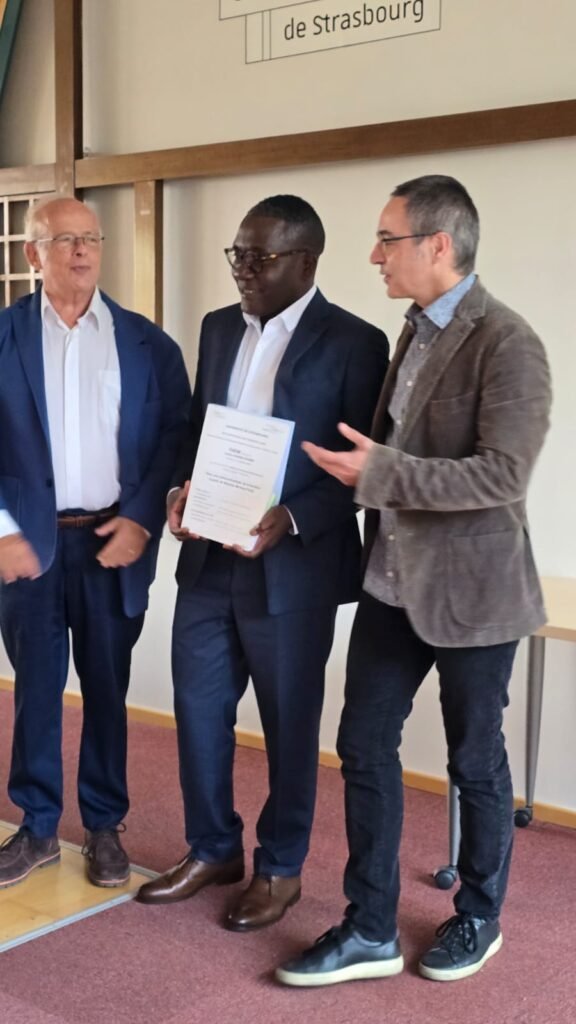
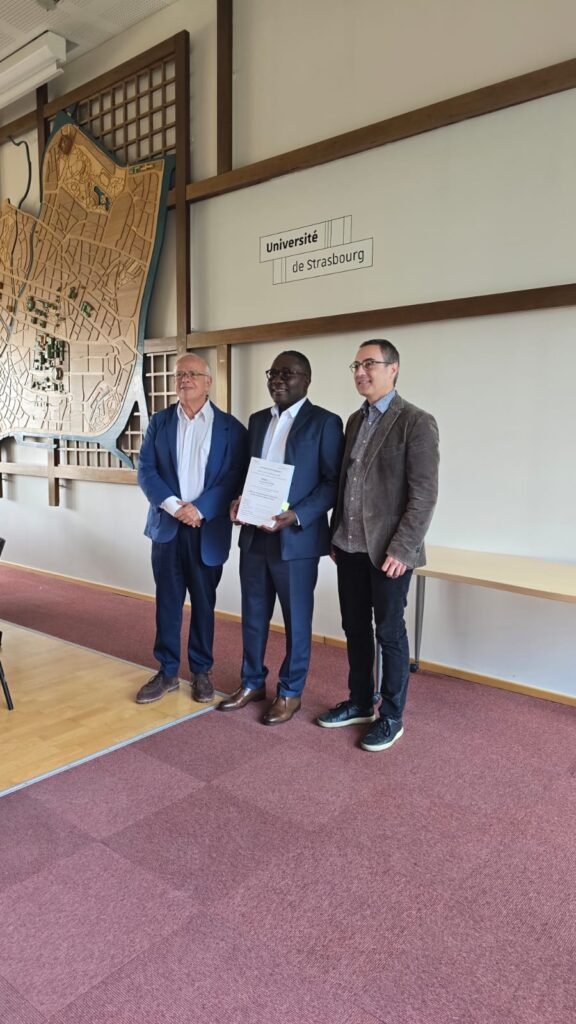
The Spiritan family in Africa and the Islands rejoices: Fr Landry N’nang Ekomie, C.S.Sp., a Spiritan priest of the Province of Gabon–Equatorial Guinea, successfully defended his doctoral thesis on 17 September 2026 at the University of Strasbourg, France.
The thesis
Fr Landry’s research brings the phenomenology of Maurice Merleau-Ponty to bear on the question of borders and on how human beings live together across them.
Résumé (original French)
La thèse étudie le sens d’être de la frontière et ses enjeux philosophiques en articulation avec la notion de la chair chez Maurice Merleau-Ponty. Il s’agit de déconstruire les conceptions cloisonnantes des frontières pour proposer un mode d’être de l’interaction humaine qui n’exclut pas la frontière mais en comprend le sens au-delà de l’objectivisme qui semble en constituer le concept naturel. Ce problème auquel Merleau-Ponty s’est confronté dans son œuvre constitue un des axes par lesquels la frontière s’invite en phénoménologie. Ainsi nous engageons un débat entre la philosophie et la « non-philosophie » pour éclairer l’institution frontalière de l’apport de la phénoménologie. En retour nous montrons la portée heuristique de l’ontologie de Merleau-Ponty et relançons le débat autour du concept de chair et des possibilités qu’il regorge pour éclairer l’appréhension de notre expérience, en particulier la relation avec autrui, ainsi que les institutions qui l’organisent, la structurent et la déterminent.
Abstract (English translation)
The thesis examines the meaning of the being of the border and its philosophical stakes, in connection with Maurice Merleau-Ponty’s notion of the flesh. Its aim is to deconstruct compartmentalising conceptions of borders in order to propose a mode of being of human interaction that does not exclude the border, but understands its meaning beyond the objectivism that seems to constitute its natural concept. This problem, which Merleau-Ponty confronted in his work, is one of the ways in which the border enters phenomenology. The thesis thus engages a debate between philosophy and “non-philosophy” in order to shed light on the institution of the border through the contribution of phenomenology. In return, it shows the heuristic reach of Merleau-Ponty’s ontology and reopens the debate on the concept of the flesh and the possibilities it holds for illuminating how we grasp our experience — in particular our relationship with others — as well as the institutions that organise, structure and shape it.
The jury
- Jacob Rogozinski, Université de Strasbourg
- Souleymane Bachir Diagne, Columbia University, New York
- Renaud Barbaras, Université Paris 1 Panthéon-Sorbonne
- Anne-Laure Amilhat Szary, Université Grenoble Alpes
- Stefan Kristensen, Université de Strasbourg
Congratulations from SCCAI
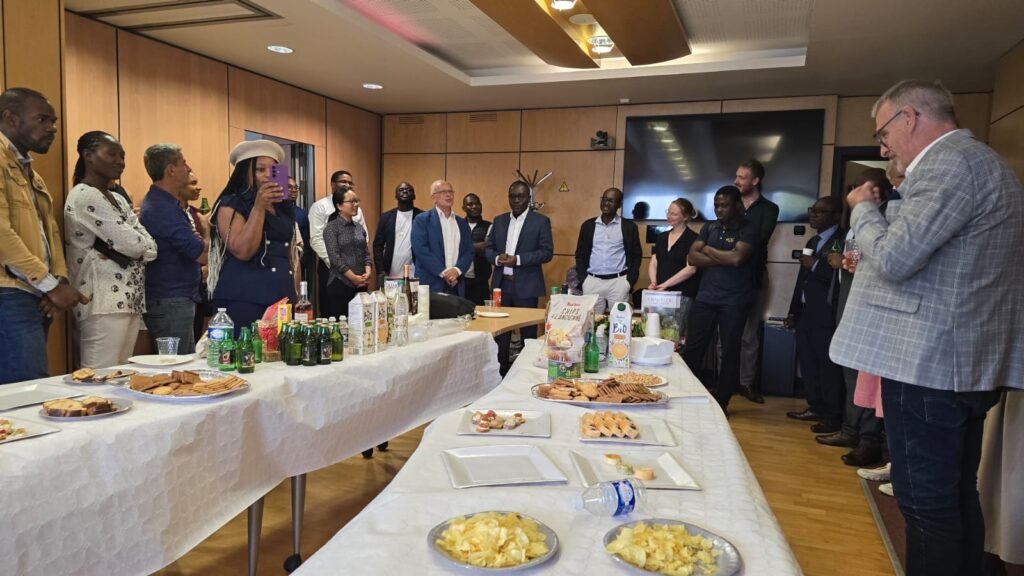
The Spiritan Conference of Circumscriptions of Africa and the Islands (SCCAI) warmly congratulates Dr Landry N’nang Ekomie, C.S.Sp., on this fine achievement, and gives thanks with the Province of Gabon–Equatorial Guinea for the gift of his scholarship. We wish him every blessing in his academic career, and fruitful research placed at the service of the integral human development of Africa and the Islands. Ad multos annos!
Leave a comment