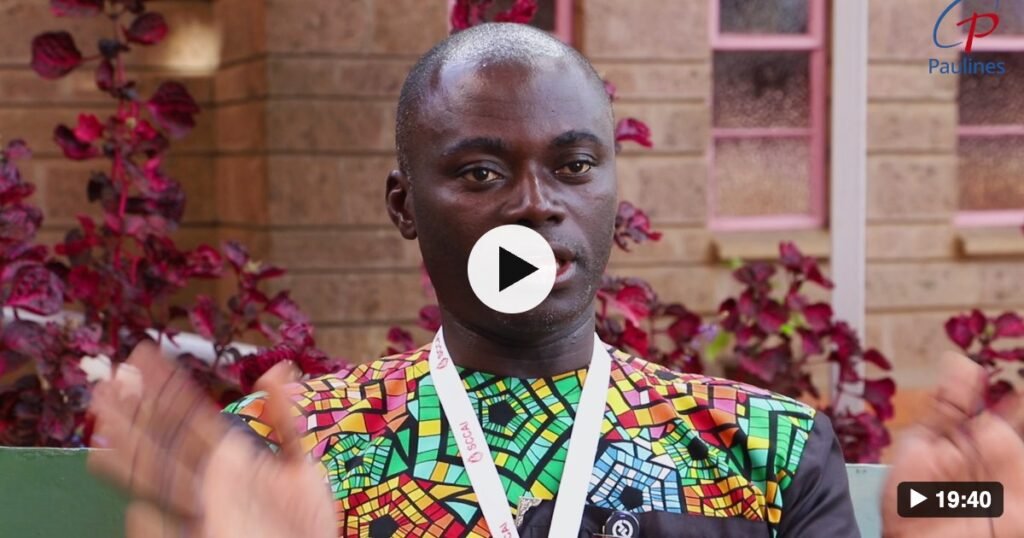
A Ghanaian Spiritan, JPIC Coordinator for the Province of Ghana, speaks about interfaith life in Ghana, the campaign against illegal mining, and young lay people embracing the Spiritan charism.
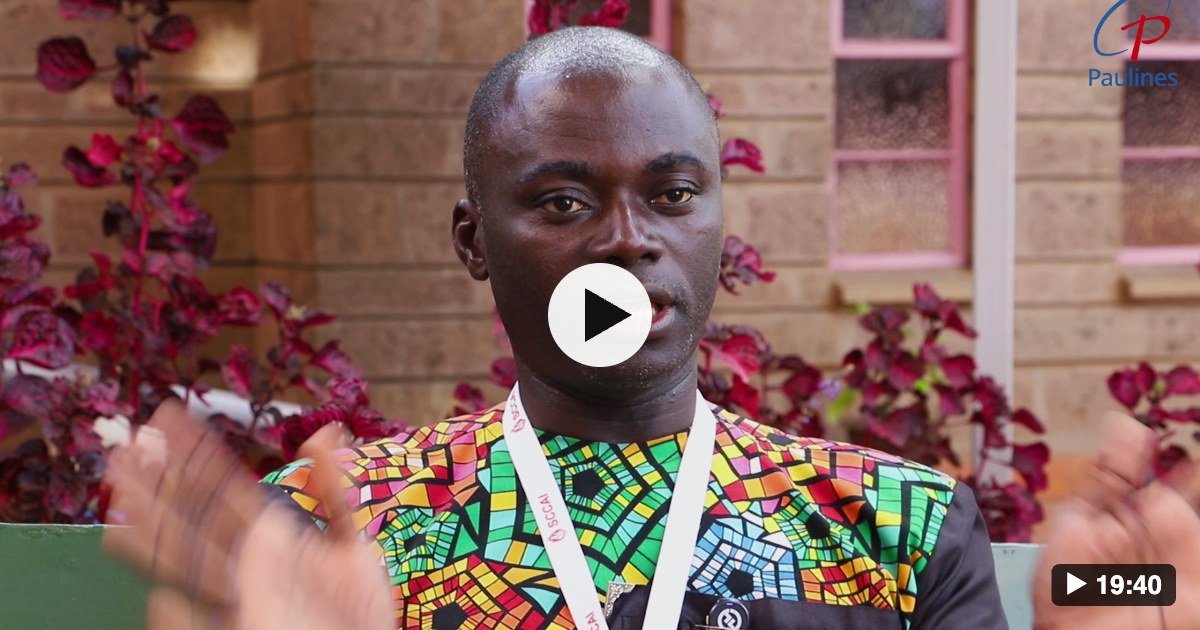
During the SCCAI Interfaith Dialogue Workshop in Nairobi, held from 6 to 10 September 2026, we interviewed Father Isaac Amponsah Boateng, a Ghanaian Spiritan missionary. Father Isaac, who coordinates Justice, Peace and Integrity of Creation for the Spiritan Province of Ghana, discussed interfaith life in Ghana, the campaign against illegal mining, and the engagement of young lay people with the Spiritan charism.
In one Spiritan school in Ghana, only five students are Catholic. Yet, at Mass, Muslim students frequently volunteer to proclaim the first or second reading. “Not that we force them,” Father Isaac explains. “They even sometimes rush to come and take the readings.”
Father Isaac is a Ghanaian Spiritan and the Coordinator of Justice, Peace and Integrity of Creation (JPIC) for the Province of Ghana. This province unites confreres from Ghana, Benin, Togo, and Burkina Faso. After over twelve years of mission in Kenya, he was called back home. Currently, he is a student, a school chaplain, and the national chaplain of the Lay Spiritan Associates.
A Beacon of Peace
“We cannot talk of peace in Africa without talking about Ghana,” he asserts. In Ghana, it is common for Muslims and Christians to belong to the same family and coexist harmoniously.
His own ministry exemplifies this. In his parish work, he lived alongside Muslims and followers of African Traditional Religion. Muslims attended Catholic celebrations, and he has prayed at the mosque on several occasions. Having studied religion and some Arabic before his ordination, he sometimes assists his Muslim neighbours in understanding Arabic texts. “The experience has been fantastic,” he recounts.
The Cage of Prejudice
Father Isaac acknowledges that coexistence is not without its difficulties. “Life without challenges is lifeless,” he states. Stereotypes persist on all sides: some Christians assume Muslims are violent, while some Muslims regard Christians as kafir, or outsiders to the faith.
“The moment you have that prejudice, already you have put them in a cage,” he explains. “You may not see the best from them.” This results in people encountering a label rather than an individual. In Ghana, he adds, some Christians who receive the Eucharist still fear the curses associated with African Traditional Religion more than they trust the Word of God.
His solution is a shared faith in one Creator. “It is the same God that we call God, other people call Allah,” he says, noting that Ghanaians also refer to God as Nyame, the one in whom a person finds fulfilment. In the spirit of synodality, he believes that recognising a shared worship of the same God will advance understanding beyond current levels.
Praying Together Against Galamsey
This shared faith has practical implications. Ghana, historically known as the Gold Coast, is struggling with galamsey, illegal gold mining that is contaminating rivers, harming health, and scarring the landscape.
As National Secretary for Justice, Peace and Integrity of Creation, Father Isaac helped organise a prayer walk that brought together people of different faiths to urge government action. “God gave us the environment to protect,” he states. “Though we are of different faiths, we come together to work towards curbing galamsey.”
The JPIC network in Ghana meets nationally once a year, operates in zones, and maintains online contact. One priest has composed an Eco Way of the Cross, which is now used at their gatherings. At their most recent meeting, no documents were printed; everything was shared via email. Communities and parishes have also been encouraged to adopt the new Mass for the Care of Creation.
Lessons from the Workshop
The workshop, Father Isaac notes, was itself an exercise in synodality. Listening to confreres from other circumscriptions demonstrated that Ghana, despite its achievements, still has much to learn. Upon his return, he intends to recommend that the Province establish a committee for interfaith dialogue. “I’m able to borrow some, and people also borrow some from what I shared,” he says.
Young People and the Spiritan Charism
Father Isaac expresses enthusiasm for the Lay Spiritan Associates: women and men, married or single, who are not professed religious but share the Spiritan spirituality. In Ghana, many of them are young. During a recent visit, the General Council observed that Ghana could become a global model for lay Spiritan youth.
The Province also hosts an annual youth gathering that attracts young people from all its parishes. Through games, prayer, and formation, they are evangelised and carry the message back to their dioceses and communities.
Africans Among Africans
The Spiritan charism, he explains, involves going where the Church struggles to find missionaries. In Ghana, this means places such as the Donkorkrom area in the Afram Plains. In Kenya, he served in Katheka, near Machakos, despite others discouraging him from going. “I lived there happily,” he recalls.
He attributes this spirit to the founders, Claude Poullart des Places and Francis Libermann, who urged missionaries to be “Africans among Africans.” For Father Isaac, this meant setting aside his Ghanaian customs to live as a Kenyan, eat local food, and learn Kikamba.
His concluding message is an invitation. “It’s very good to be a Spiritan,” he says. Young men may join through formation for profession, while women and men from all walks of life are welcome as Lay Spiritan Associates.
Watch the full 19-minute-40-second video and read the original article on Substack.


Leave a comment